
If you’ve read this blog before, you may recall that I firmly believe that character is the most important part of a novel. It’s not always (or even ever) where I start when I begin writing a novel, but it’s always the single most important ingredient, period. If there’s an exception, I can’t think of it. That’s the hill I’ll die on. Plot keeps us turning the pages, setting immerses us, but character makes us care.
In fact, if you’re racking your brain for a story idea, character is a terrific place to start. Think of a character … a college student, a sailor, a Native American Medicine woman. Then, develop them. Once you’ve done that, think of what that character wants most in the world and then who or what doesn’t want them to have it. Now you’re on your way to a story.
Of course, developing a compelling character is easier said than done. There are, however, some tricks that can help you. For example, one of my very favorite authors, the utterly amazing N. K. Jemisin, gives a terrific Masterclass on writing fiction in which she advocates using Maslow’s Hierarchy of Need when creating characters. That’s absolutely brilliant, and I can’t recommend her Masterclass series highly enough.
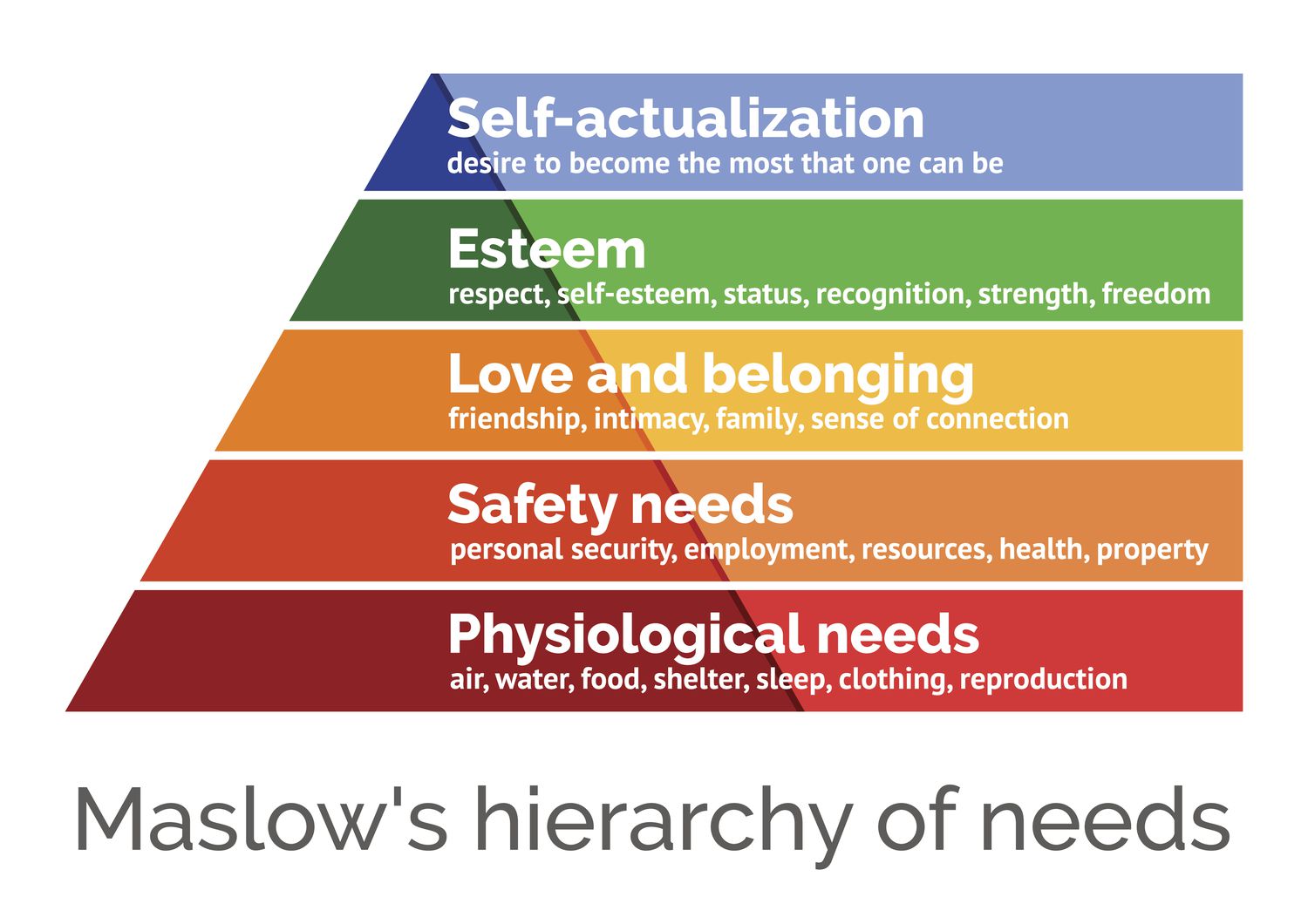
If you’re not familiar with Maslow’s Hierarchy of Need, simply put (which, alas, is all I’m capable of), it’s a motivational theory in psychology comprising a five-tier model of human needs, shown as hierarchical levels within a pyramid. These needs are the things that motivate us, and generally, we have to achieve the lower levels (food, water, and safety) before we can start to consider the higher ones. The order of the levels is not completely fixed. For some, esteem outweighs love, while others may self-actualize despite being impoverished. But you get the idea. Most people probably don’t reach that top level of self-actualization, but we can all have moments of peak experiences. That’s the tip top of the pyramid. It’s important for us as human beings, and it’s important for characters, too.
So how do you use this when developing characters? The bottom layer of the pyramid would probably be things we’d notice about someone in an elevator. Young, old, in between? Male, female, or ambiguous? Nice clothes? Athletic wear? A uniform? All of these details tell us something meaningful about the character. It’s important, but it’s shallow. It’s the bottom level of N. K. Jemisin’s pyramid.
As readers, though, we want to know more, especially about the main characters. I believe the writer must know more. And so we climb the pyramid, passing through what the characters do (chef, knight, student, detective, lawyer, witch), to where and how they live, to what their family and social life is like, and so on. All the way up to what might give them self-actualization. If you can hit all five levels, you are well on your way to having a complex and well-developed character. You know what their ultimate goals are, even if they themselves do not.
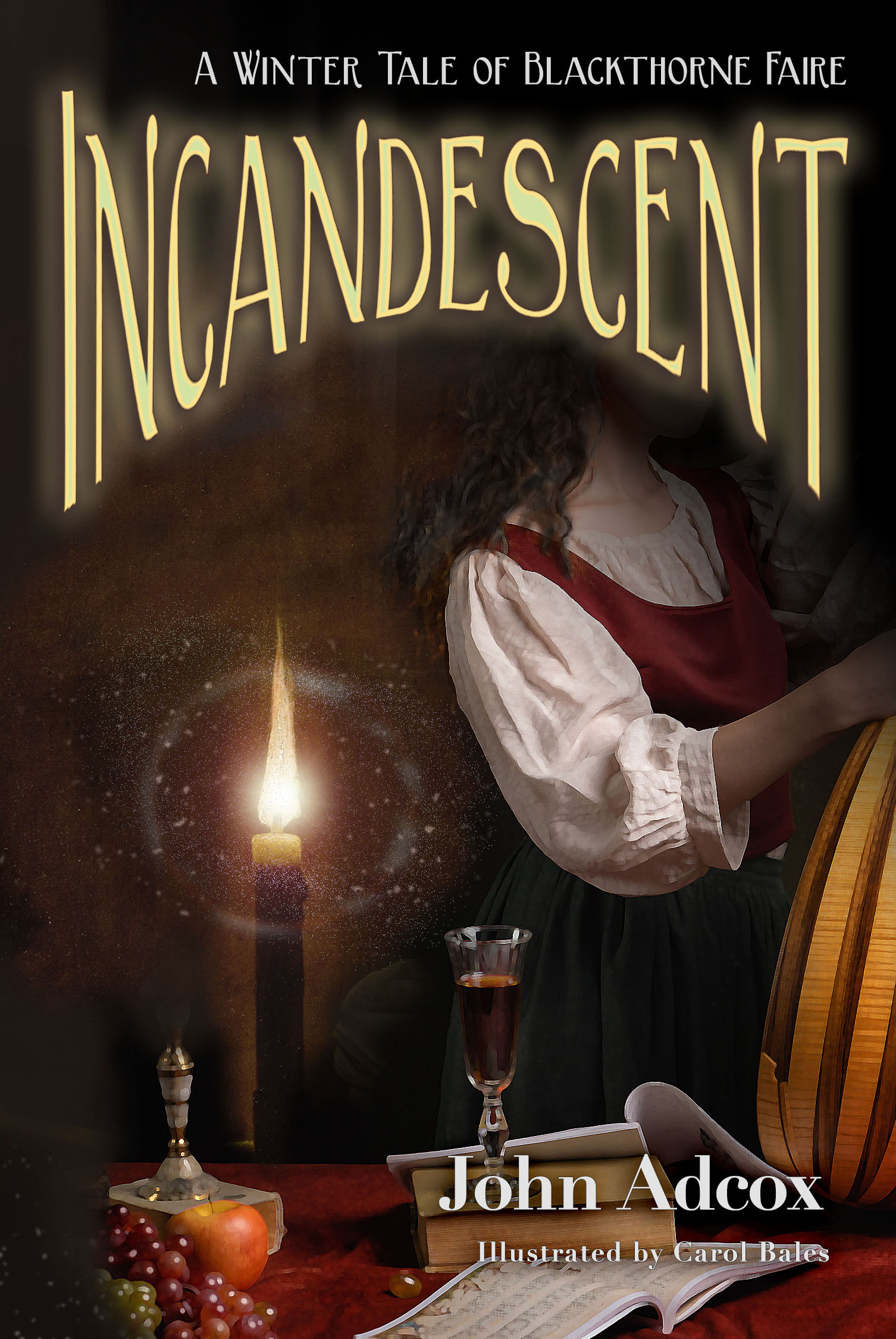
As habitués of this blog will know, I am currently working on a new novel called Incandescent: A Winter Tale of Blackthorne Faire. It’s the latest of my Winter Tale novels and is set at the Renaissance festival introduced in the first of my epic novels, Blackthorne Faire. In that book, I am facing a challenge. You see, for reasons of story, both plot and theme, I can’t reveal most of the more obvious things that would be at the bottom of the pyramid. For example, I can’t tell you anything about the first-person narrator’s race or appearance. That means I can’t tell you much about how they dress or who they might be likely to love. So basically, I’m missing the entire base of the pyramid.
Lucky for me, the pyramid has more levels. Those are the levels I’m exploring in the book. I can’t tell you the narrator’s sex or sexual preferences, and I’m only hinting about the character’s past. Instead, I’m concentrating on how they feel, what they yearn for, and how they react to their friends, to music, to food and drink, to theatre. I’m concentrating less on the events of the story (although there’s a mystery to keep the pages turning, although with some romance and a touch of magic) and more on how the narrator responds to them.
In the opening chapters, the narrator is basically solving the “safety” level of the pyramid, so they can finally begin to think about the higher levels, things like love and aspirations, possibly for the first time in their life. And yes, I’m using a lot of they/them pronouns. There’s a legitimate story reason for that, but it also helps me avoid all the bottom of the pyramid stuff.
My hope is that by keeping the reader so intimately connected to the character’s thoughts and feelings, by constantly showing the events of the story through (and only through) their eyes, by having the narrator describe how the events move and change them, I can make the story a much more intimate experience for the reader. I think these are the things that make us as readers care about any character in any story.
This book is the hardest thing I’ve ever tried to write (and since my traditional publisher, The Story Plant, already has it on sale, well, no pressure) but it’s a fascinating experience so far. I’ve had to build a character without any of the crutches, as it were, and try to find a way to make you, the reader, care. After all, if you don’t care, the book doesn’t work, period. And while it’s been exceptionally difficult, it’s an exercise I recommend highly. If you’re a writer, try describing your main character, at least to yourself, without using any of the bottom of the pyramid stuff. If you can do that, and care, you know that character well and you’re ready to start shaping their story.
By the way, Casey, my main character and narrator in Incandescent, has a love interest. Again for reasons of story, I can tell you even less about the potential romantic partner. By less, I mean literally nothing. Not one single detail. Nonetheless, I can promise you this. By the time you finish reading the story, you’ll come to know that love interest better than you’ve ever known any literary character in any medium, ever.
If you like this blog, I’d be grateful if you’d share.

 John Adcox: Thoughts on My Author’s Journey