
A fast note: versions of this article have been published before, most notably in the amazing Silver Leaves, a scholarly journal focusing on J. R. R. Tolkien, C. S. Lewis, and the Inklings. It is a terrific publication, a must for both the causal and the obsessive fan. Best of all, the proceeds go to charity. Please give it a try if you can.
Play The Lord of the Rings Online

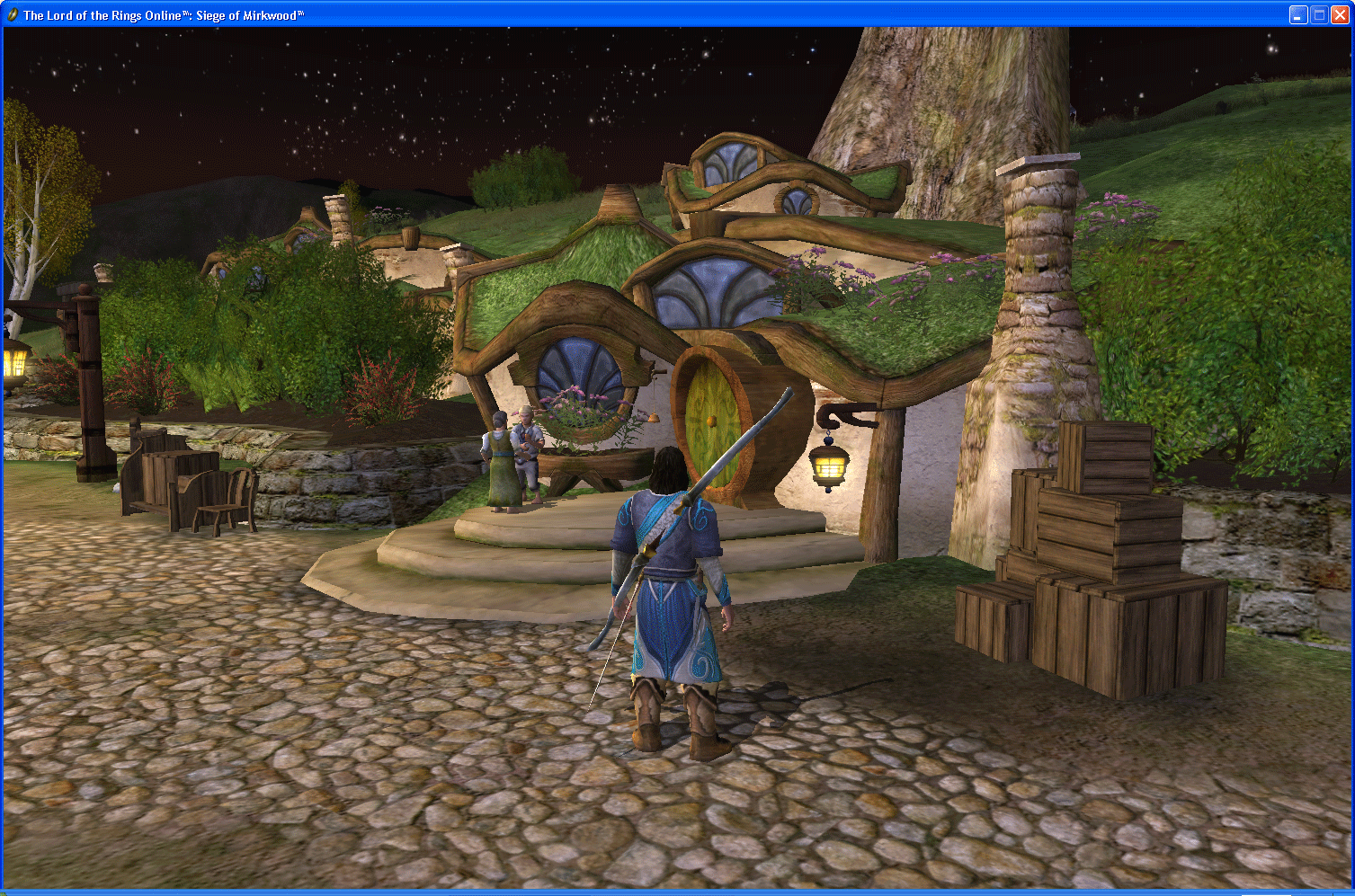
I don’t think I am the first to have been so lost in a story that I’ve almost forgotten I’m reading, and that there’s a world around me that will, all too soon, require my attention. I am probably not the first to long to vanish into a story for a longer period, to hear forgotten tales at the Hall of Fire in Rivendell, or raise a pint with the Gaffer in the Ivy Bush. And I don’t think the desire to go left, when the author took the characters right, is necessarily a lonely one. What might have happened then? What paths were left unexplored? What surprises did the author not reveal? Is the beer at the Golden Perch really that good? What of the Forsaken Inn, a day’s journey east from Bree, that Strider hinted at so tantalizingly? What is that like? Or Staddle, the hobbit town outside of Bree; could it be as charming as our beloved Hobbiton?
Critics, of course, would be quick to dismiss that longing as puerile escapism. And they are, of course, quite right, the smug rascals. But as Professor Tolkien himself noted, who objects to escapism? Jailors. The master wrote in On Fairy-Stories: “I have claimed that Escape is one of the main functions of fairy-stories, and since I do not disapprove of them, it is plain that I do not accept the tone of scorn or pity with which ‘Escape’ is now so often used. Why should a man be scorned if, finding himself in prison, he tries to get out and go home? Or if he cannot do so, he thinks and talks about other topics than jailers and prison-walls?” Since Tolkien is careful to distinguish between the escape of the prisoner and the flight of the deserter, the question arises: what’s wrong with wanting to escape into a story, to wander the hills of unknown shores, now and again?
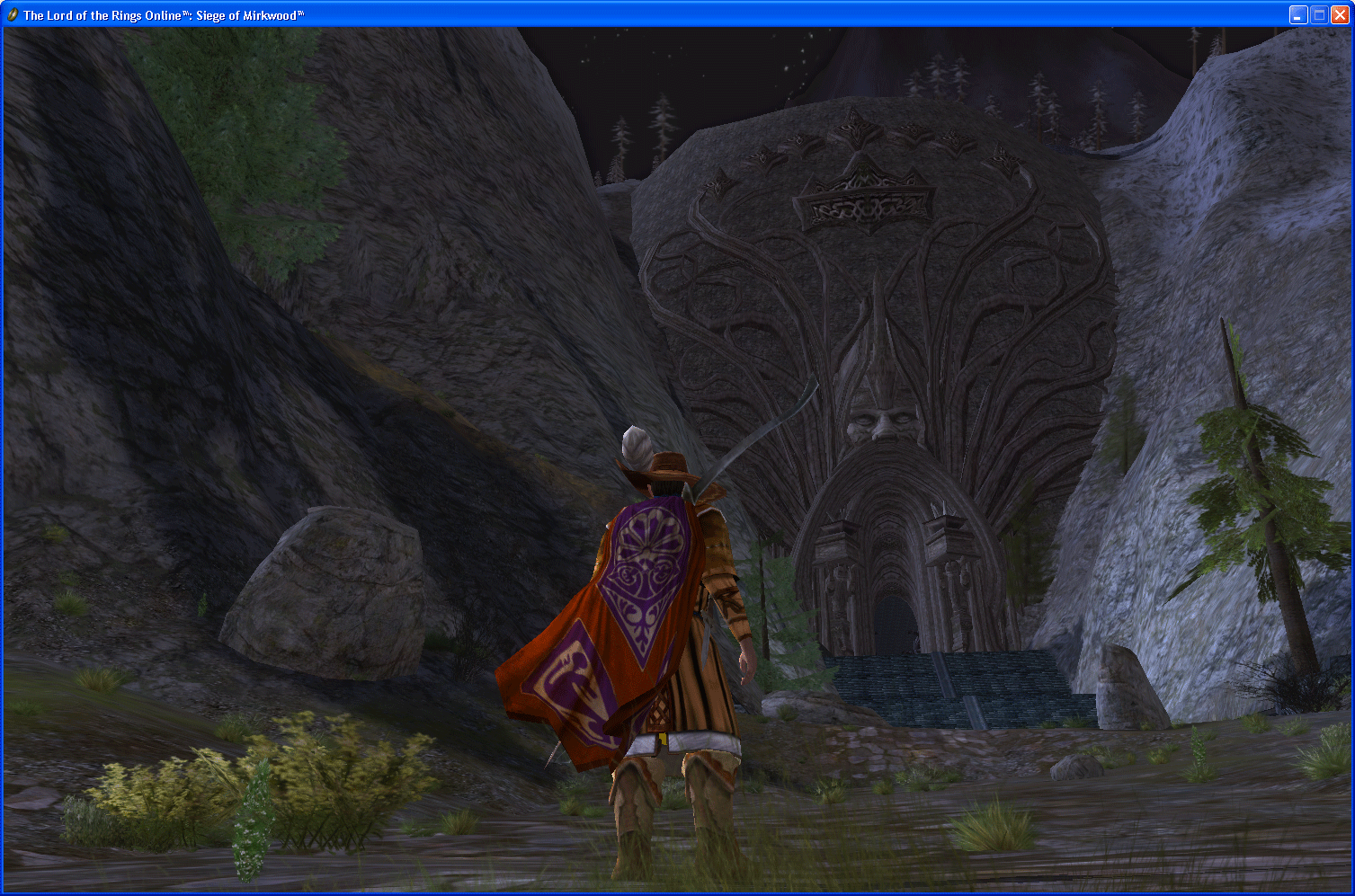
Unfortunately, books have endings, the hidden roads remain lost and secret gates unopened. As much as we might want to, we can’t wander north to see what is beyond the Shire, or linger in Lórien’s golden wood, and Fornost remains forever only a dread rumour.
Until now.

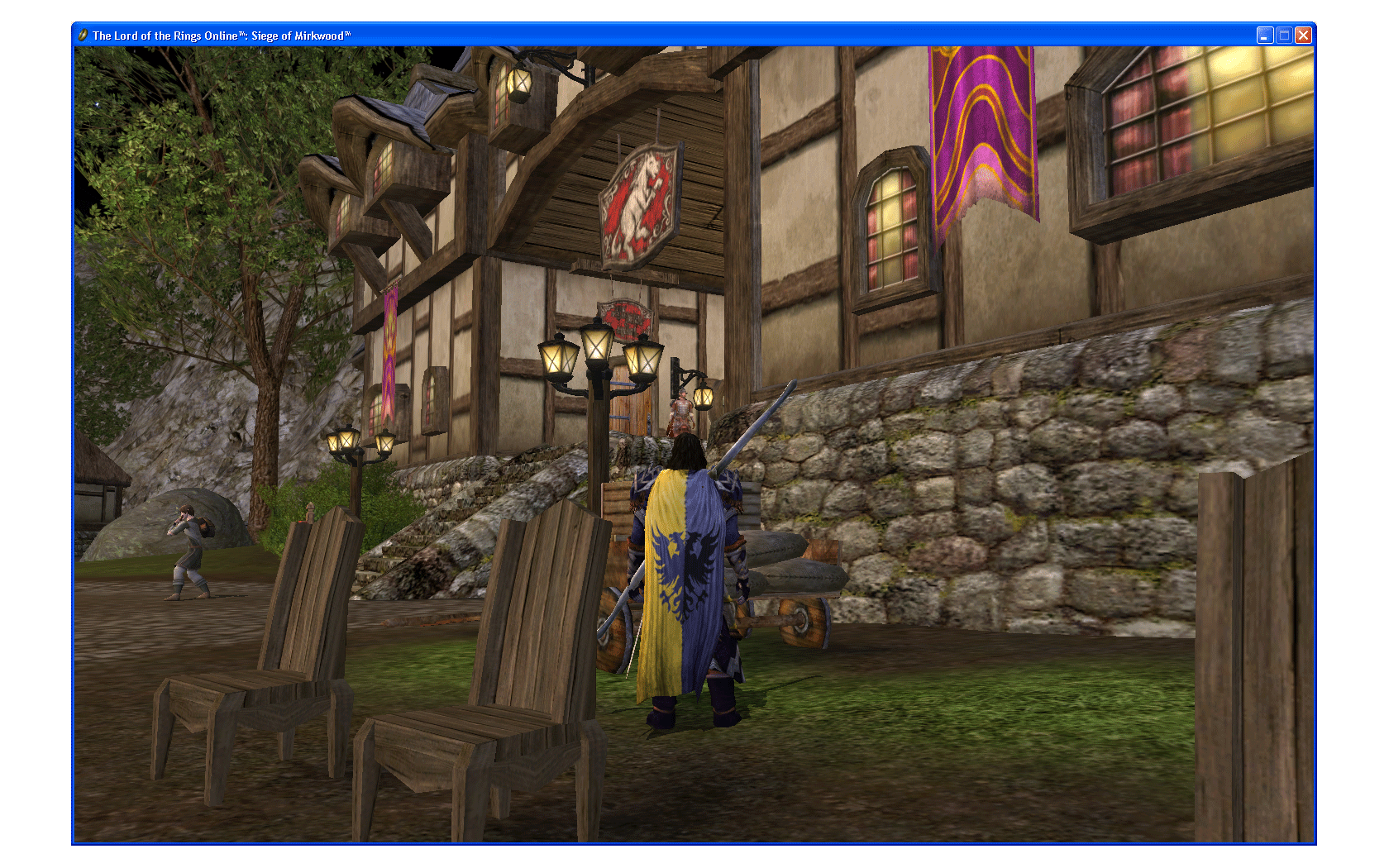
And, of course, there are a few smiles and in-jokes for the more dedicated fans of Tolkien and the Inklings. The Inklings met regularly at an Oxford Pub called the Eagle and Child, or “the Bird and Baby,” as they affectionately called it. In the game’s version of Michel Delving, just below the famous Mathom House, you’ll find a pub called The Bird and Baby. The painted sign will be familiar to any fan of Tolkien, C. S. “Jack” Lewis, Owen Barfield, or Charles Williams, who has visited Oxford. If you wander to the back room of the game’s version, you’ll find a group of lively hobbit friends raising pints, arguing literature, and wondering about the whereabouts of their friend Ronald Dwale. Their names are Jack Lewisdown, Owen Farfield, and Carlo Williams. What fun to spend a lively few minutes, even virtually, with the Inklings!
Indeed, it’s tempting to ignore the “game” play and simply wander and take in the sights, or simply to stand on the porch of your very own Hobbit Hole or Bree house and blow a few virtual smoke rings as you chat with the neighbors. But then, the game itself is terrific fun.
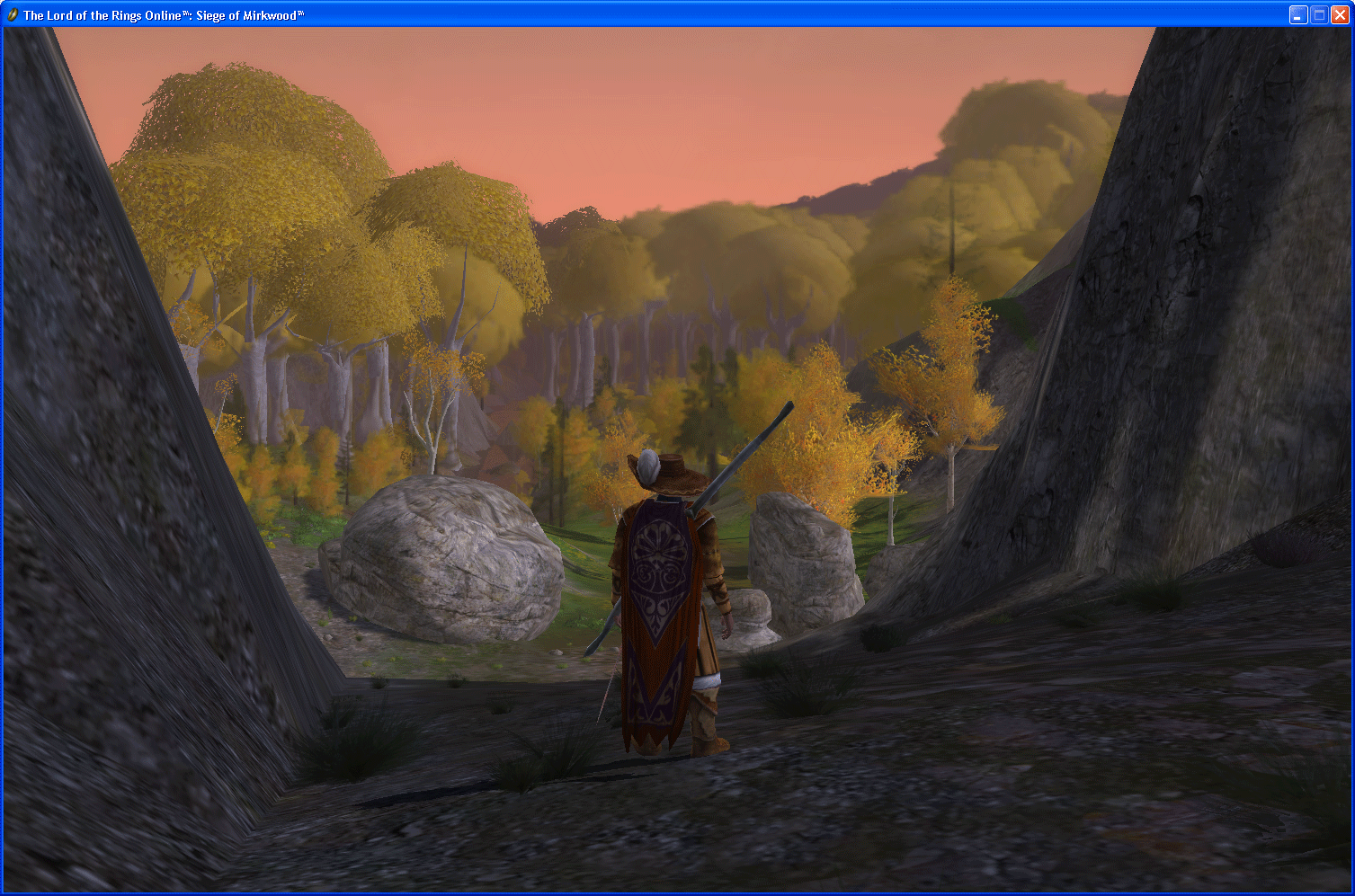
The first thing to understand is that this is a multi-player online game. As you wander Middle-earth, you’ll constantly bump into other players—Hobbits, Men, Elves, and Dwarves. The hobbit you meet at the Moria gates may be your neighbor; that Gondorian warrior in the North Downs may be huddled over a computer in France or Africa.
It’s the social aspect that makes the game so utterly charming. Need help? Ask, and someone is sure to give it. And you’ll find yourself doing the same, even when the laundry needs folding or bed is calling in the last hours before an early morning. And you’ll find that, by and large, the people you encounter are kindred spirits. They, too, fell in love with a certain story. And, just like you, they longed to be a part of it: to share the adventure.
You begin by creating a character. Select the gender and the race—a female Elf or a male Hobbit, for example—and then choose a class: minstrel, warrior, burglar, captain, or lore master. Each has their own set of skills and attributes. Next, customize the appearance—hair colour, body type, even the shape of the nose and the size of the lips. Finally, choose an occupation. The game has an economy, and you’ll find it useful to craft a weapon, grow a crop of pipeweed, stitch a cloak, or even cook a tasty breakfast to make your way in the world. Choose a name. You’ll find that your characters become, well, characters. I play the mighty Jack Rowenstaff, warrior of Bree, Nickollas Windsong, minstrel hobbit of the Shire, and Nedberry, burglar—or rather, expert treasure hunter. There’s something rather Tookish about those latter ones, I dare say. Much to my very great surprise, I’ve come to care about them almost as much as I care about characters in a favorite story. Hmmm. I wonder if the idea of Mythopoeia can apply to a computer game. Why not?
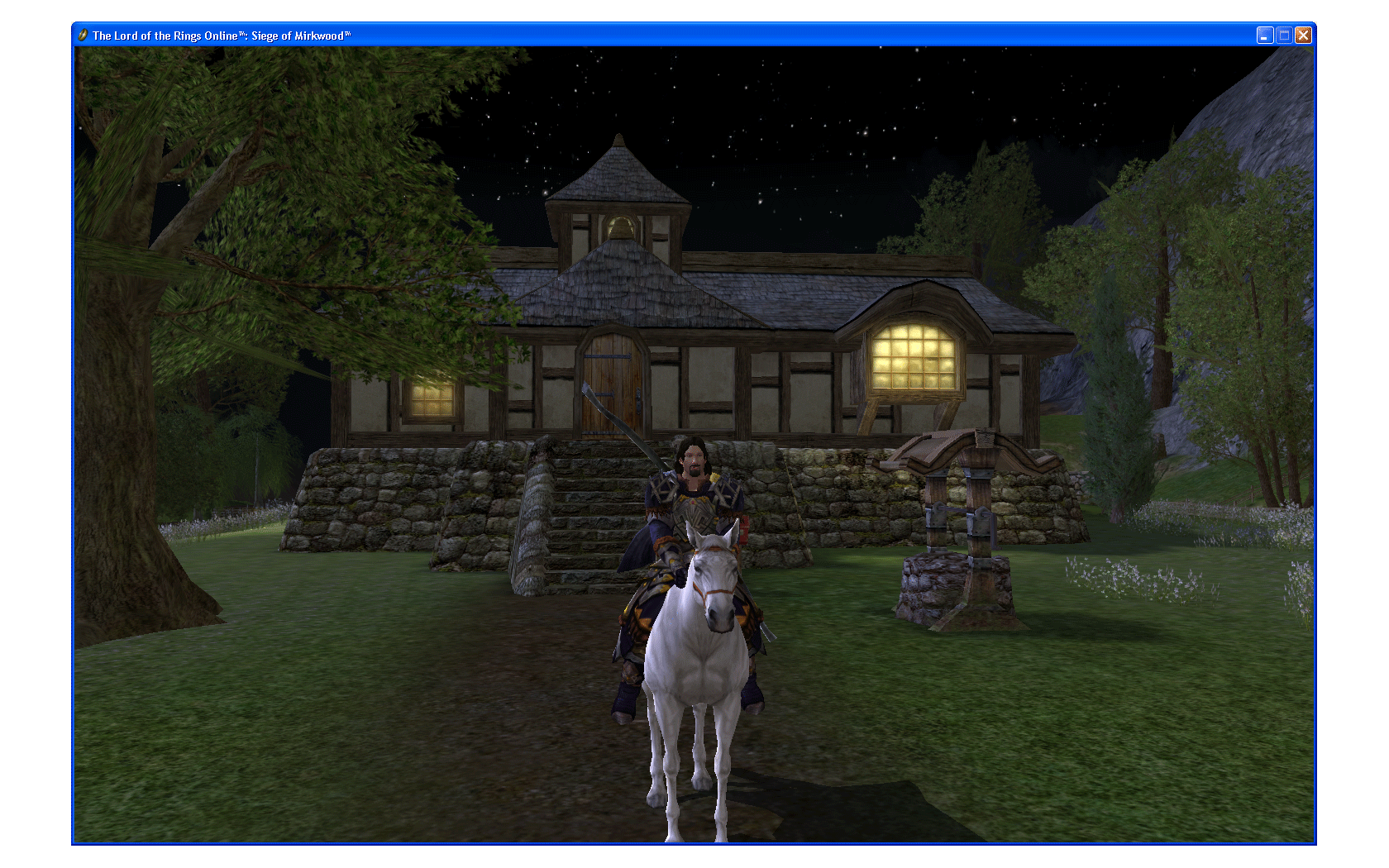
Players can undertake quests—anything from delivering pies in Hobbiton, to finding Bilbo’s lost buttons in Goblin Town, to slaying an army of Orcs in Moria, or even trying all the beer in the Shire. That’s the object of the game. The more quests one completes, the more experience your character gains. With more experience, characters gain new abilities. Quest completion also nets rewards—nifty items or money to save for buying those horse rides and Hobbit holes.
The game takes place concurrently with the events in The Fellowship of the Ring. For all players, the game begins about the time that Frodo and Sam leave the Shire. This means that your story parallels the one you know so well. And, indeed, you provide some unseen help. For example, when you arrive in Bree, a strange Ranger called Strider asks for your help. That begins a game quest. By the time you’ve finished, you race back to learn that Strider has left in a hurry with four Shire hobbits. In his place, you speak to Gandalf the Grey himself, who is eager for your news. And another quest begins. Later, you find an abandoned pony just outside the Moria gates, and save him from ravenous wolves. This is, of course, poor Bill and you help him return to the safety of the Elves.
You can’t alter the familiar events, of course. But your aid, given “off screen” as it were, fits seamlessly with the story you know so well. Perhaps best of all, you get to witness, first hand, some key events: the reforging of the sword Narsil and the departure of the Fellowship from Rivendell, for example.
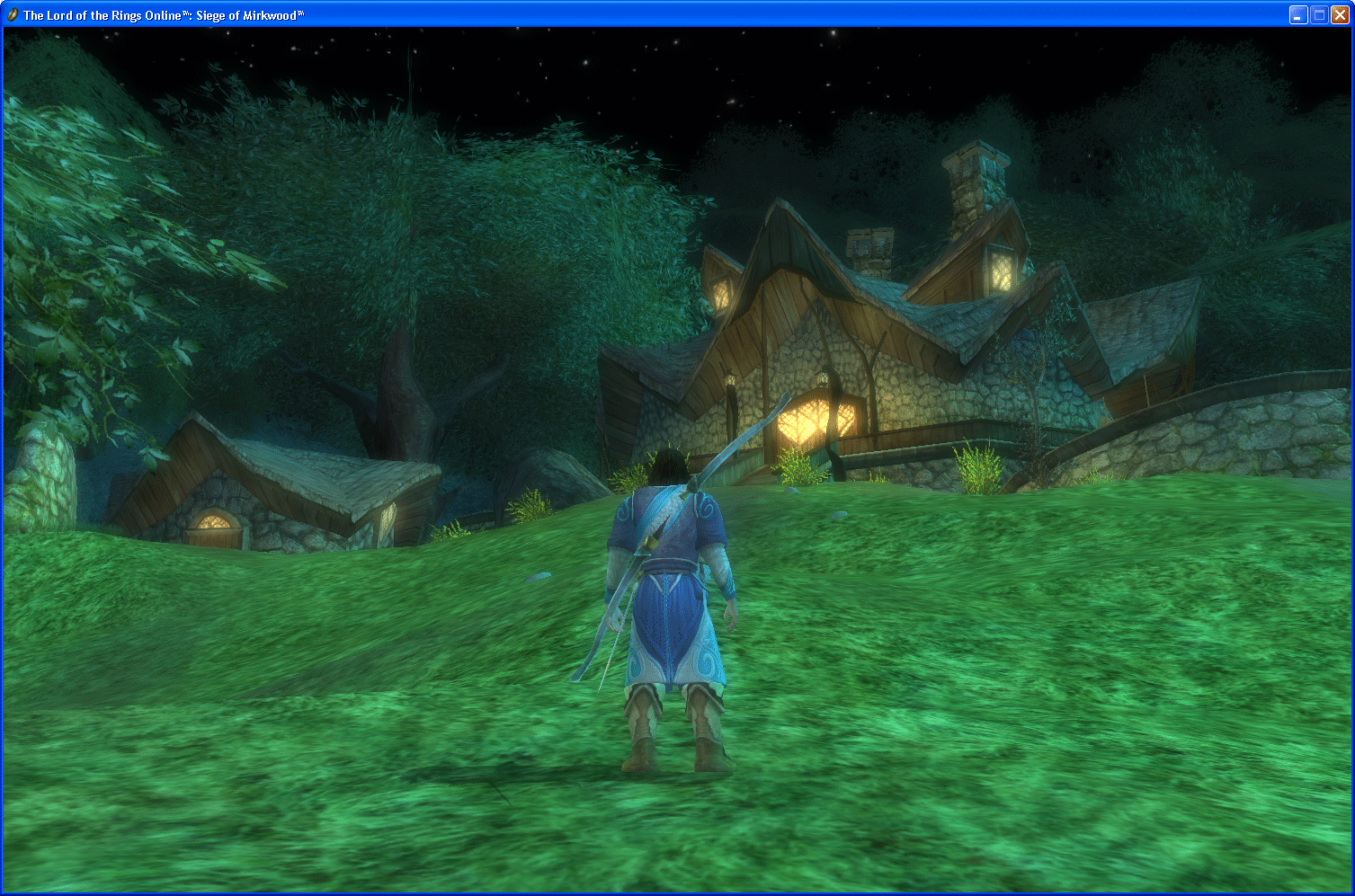
For the most part, the game truly feels like Tolkien. Sure, there are a few more monsters than you remember from the books—but none that would seem out of place in the Nordic and Anglo-Saxon sagas that Tolkien loved so deeply. And yes, some of the quests can be redundant and, at times, even tedious. But no worries. You can skip those, or find some new friends and complete them as a fellowship, sort of making a party of it.

I do have a few complaints about the game, and I fear this first especially is one shared by many.
I discovered the game when my wife started playing it for business research. She was immediately hooked and insisted that I give it a try. I used her account to create a character of my own. Now, I too am hooked, and have opened my own account. But my main character is trapped on her account. We’d love to play together, but since I can’t transfer that character to my new account, that option isn’t available to us. It is available, for a fee, on many other games, so I hope the folks at Turbine will offer it soon. I know many other couples and families in this same very frustrating boat, and Turbine’s inability to accommodate them is costing them customer loyalty and good will.
In their defense, Turbine spokesman Adam Mersky says that this service is not offered to prevent fraud and to protect the game play experience for the majority of their subscribers. But bluntly, speaking as someone who has worked in new media, e-commerce, and even game development, I can think of at least a dozen simple solutions without breaking a sweat. The resources required, of course, aren’t trivial, but speaking from experience, honestly, it’s a fairly simple matter all told. More, people seem more than willing to pay a premium for this service. In this economy, when someone wants to pull out the old credit card, find a way to accept it.
The other complaint is a bit more serious, and it involves customer service.
Recently, I joined a group of friends for a very long (something like four hours) adventure, which was supposed to lead to some nifty items to better equip your character. We fought through and completed the adventure … only to discover that the chests were bugged. We couldn’t open them. No loot. The four hours was vanished forever.
Now of course, I understand that software, but its very nature, it occasionally buggy, and in the case of The Lord of the Rings Online, problems are extremely rare. In any business, problems arise. It usually can’t be helped. The best you can hope for is to make problems as rare as possible (Turbine gets an absolute A+ here), and to make every effort to make things right when they do arise. In the latter case, Turbine failed, and miserably.
When we reported the problem, we were informed that there was nothing Turbine could do to correct the problem, which is understandable. But Turbine’s customer service rep made no effort at all to address the issue. The rep wasn’t even especially polite about it.
Again, problems arise in any business. But all the same, when you pay for a product, it’s not unreasonable to expect that product to, you know, work. When it doesn’t, you expect the company you’re doing business with to make some effort to make things better. If you buy a new television and find it doesn’t work, you expect to have it replaced. If you check into a hotel and find that the shower doesn’t work, you expect to move to another room. If you go to a movie and the film breaks, you expect the theater to make a repair, and probably hand out a few free passes if the delays stretch on too long. If your steak is overcooked, you expect to get a new one. Usually with a heartfelt apology from the manager.
Turbine offered … nothing. No attempt to mail the items we’d just one, or something else. No apology. No coupon for free play to offer a friend. Not even an apology. We were just told, tersely, to try the instance again.
Speaking only for myself, four hours of time is a pretty precious commodity, and it’s not very easy to come by. Not by a long shot. I truly haven’t had it available in the weeks that passed. While the costs of the game are fairly insignificant, I do value my money, too. Turbine should have made some customer service outreach. Something. Even if it was just an apology.
From another company, I might understand. You don’t, for example, expect the same service from a $14 a night no-frills motel that you get at, say, the Ritz Carlton. But Turbine has always, always been a first-class organization. I expected better from them, and I am deeply, deeply disappointed.
On the other hand, it is a rare experience. That’s something.
To play The Lord of the Rings Online right away, you’ll need to purchase the game (either on disc through Amazon, Best Buy, Target, or any other affiliated stores) or download from the Internet. You’ll also have to purchase a monthly or lifetime subscription. Subscription rates are reasonable, and start at around $9.95 for unlimited visits to Middle-Earth. I purchased a lifetime subscription, so I have no monthly fees. A free trial is also available. If you wait a month or so, the game will be free to play, with very attractive additional content available for (surprisingly reasonable) cost. The free to play sounds like a great way to try before you buy, but I imagine that most players will want to upgrade fairly quickly.
For more information, please see: http://www.lotro.com.


 John Adcox: Thoughts on My Author’s Journey
“Virtual passport to Middle-earth” – yes! Perfect way to describe it.
Excellent review of LOTRO from a non-gamer perspective. Turbine really did a fantastic job and I hope more non-gamers find their way to this virtual Middle-earth.
I really enjoyed your take on The Lord of the Rings Online. Your reflections on how the game draws players into its epic narrative really resonated with me—it’s fascinating how the rich lore and immersive world can make you feel like you’re truly part of Middle-earth. I appreciated your honest take on the pacing and how the story elements weave into the gameplay. It made me wonder if others feel that the narrative depth outweighs some of the mechanical quirks of the game.
This review really brought back the magic of LOTRO for me—there was nothing like getting lost in Middle-earth for hours on end! I used to get totally immersed in the epic quests and deep lore too. Which quest or moment still stands out to you the most?
Thanks for this game review of The Lord of the Rings Online. I loved the description of visiting Bag End and the Shire, those wish fulfillment moments sound magical. I also appreciated the Silver Leaves mention and the charity connection; it made the piece feel personal.
Great review of The Lord of the Rings Online. I loved how you described Jack Rowenstaff visiting Bag End and the Shire’s charm. The focus on wish fulfillment and places like the Prancing Pony and Lothlórien made me want to log in right away.
This gem of an article offered precisely the practical tips and theoretical grounding I needed to move forward confidently.
Immense gratitude for these brilliant observations and the clear, concise way you’ve presented them for your eager audience.
I learned so much from this article. Extremely well-written and informative.
I was exploring various game tools and found The Forge Script, and the simple, uncluttered layout made it really easy to see what each script offers.
I was exploring various game tools and found The Forge Script, and the simple, uncluttered layout made it really easy to see what each script offers.
I was exploring various game tools and found The Forge Script, and the simple, uncluttered layout made it really easy to see what each script offers.
My sincere thanks for this thoughtful and incredibly relevant article. Much appreciated.
Thanks for sharing this review! I love how you describe the wish fulfillment in fantasy games like LOTRO. Visiting the Shire and other iconic places sounds so immersive and fun. Makes me want to jump in and explore myself!